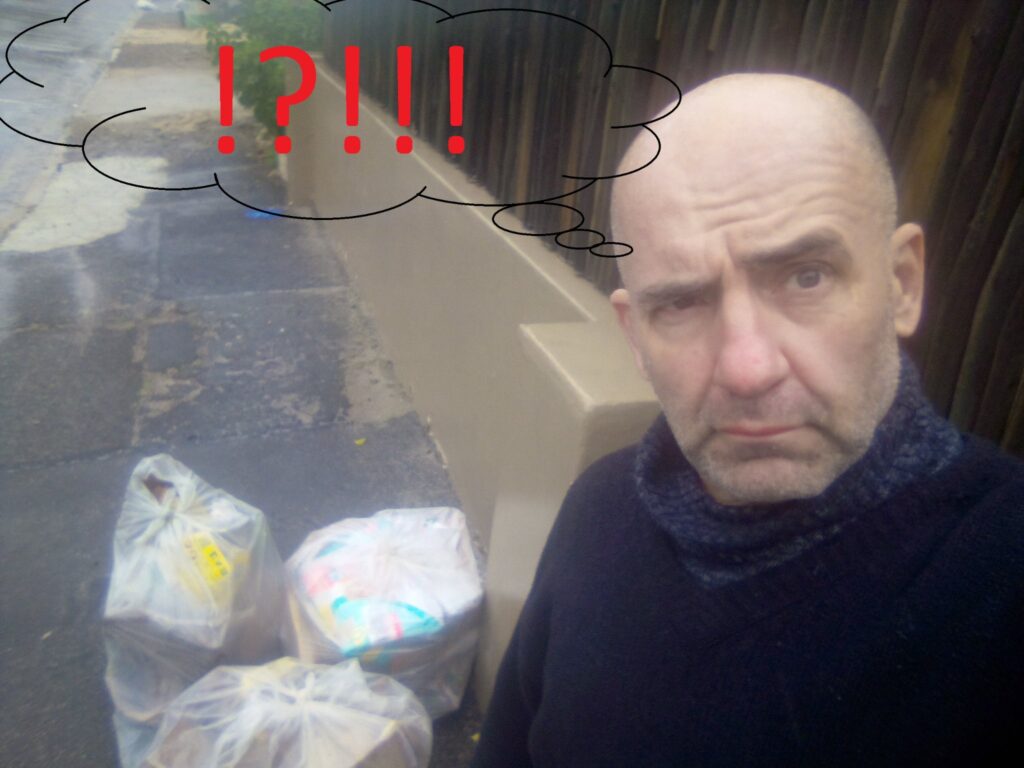
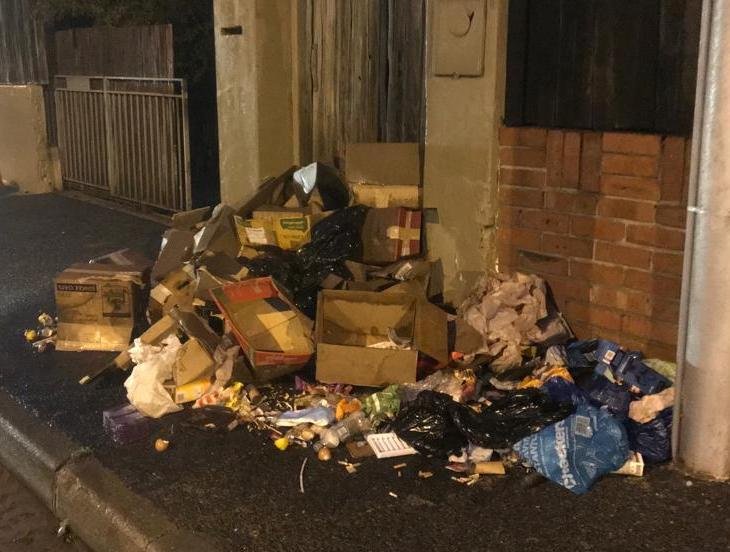
On Thursday morning I received a message with a photo of a whole lot of garbage that had been dumped on the front door of our rental property, sent by one of the tenants.
My wife found me surprisingly stoical and this refusal (or even “non-experience”) of anger (an emotion that has always come easily to me) is a good sign of spiritual growth.
In each unfolding season of my life God seems to highlight a specific heart issue and then seems equally to orchestrate events to train my heart (a kind but ruthless coach is God). How can gentleness, for example, be learned, except by learning to repeatedly choose it (in thought and speech and action) in situations that naturally trigger “ungentle” responses.
This cleansing of the heart and rewiring of the brain takes time, just like the time needed for broken, torn, infected or cancerous parts of one’s physical body to mend.
In physical healing, gauzes, splints and casts stabilize and protect the wound, preventing further damage or infection, enabling healing to progress.
I think something analogous is meant to happen in spiritual transformation.
Mental reframing is like gauzes or splints, which do not obviate or substitute for the challenging healing process but certainly do protect it, freeing it to progress rather than fight further damage.
Consequently, the mental reframing that the literal and figurative “rubbish” that comes into our lives is “normal” for this temporarily corrupted world, which Jesus declared to be full of “moth and rust” and “trouble”, helps one to conserve energy and not “kick against the goads”.
And the mental reframing that this really is a “first world problem” helps one not to be a prima donna. I can hear the homeless person say: “I live on the street; I wish I had a house that people could dump trash next to”.
I’m reminded of that wonderful Monty Python skit of four Yorkshiremen. At this point in the dialogue the fourth Yorkshireman’s small leaking house has long been trumped:
…SECOND YORKSHIREMAN:
We were evicted from our ‘ole in the ground; we ‘ad to go and live in a lake
THIRD YORKSHIREMAN:
You were lucky to have a lake! There were a hundred and fifty of us living in t’ shoebox in t’ middle o’ road
FIRST YORKSHIREMAN:
Cardboard box?
THIRD YORKSHIREMAN:
Aye
FIRST YORKSHIREMAN:
You were lucky. We lived for three months in a paper bag in a septic tank.
When I got to the property to tidy up the mess, which the municipal truck had obviously left, I had a momentary lapse. I thought: “Who would do this? Why did they dump it here? Why didn’t they dump it on my neighbour’s entrance?”
I slapped myself and I tidied the mess into bags, thinking how strange it was that it was right on our front gate and started to think about who might have a grudge. I started to think of strategies to keep the property and tenants safe.
Then the other wonderful kind of reframing happened.
This automatic and unassisted reframing happens when a new piece of information comes to light and instant cognitive reinterpretaton occurs. This could be one aspect of what Jesus meant when he said, “you will know the truth and the truth will set you free”.
It turns out it was one of our new tenants who had just moved in. All the packing boxes along with two sealed dustbin bags had been put out the night before, not knowing that care and tidiness are not part of the priorities of the army of homeless people who sift through South Africa’s trash week after week (I definitely don’t see “care” and “tidiness” in the descriptors of the first rung of Maslow’s Hierarchy of Needs).
The tenants also hadn’t realized the municipality protocol (“if it ain’t in the official bins it ain’t none of ours”).
I laughed and felt relieved we weren’t caught in the cross hairs of a disgruntled somebody.
This reminds me of other examples of reframing, all more wonderful and significant than this little incident.
The first was from a healing seminar I was on. There was a testimony from a woman who had developed a rejection complex from a painful childhood event, when she had walked into a room and everyone had stopped talking. Her child’s interpretation of exclusion and rejection kept repeating and playing out in a lifetime of pain and rejection. When, in adult life, she gained the new information that she had actually walked into a planning session for her own surprise birthday party, there was a radical healing of that memory, and with it, like a string of dominoes, an equal reframing and healing of many of the multiple experiences of rejection her life. Of course our God – to whom past, present and future are equally real and accessible- can do this; perhaps we should call it quantum healing.
The famous “Footprints in the Sand” poem and, in the Bible, Psalm 73 and the whole book of Habakkuk are further powerful examples of reframing.
If you believe a lie (or a half-truth or corrupted data) you will feel a lie and live a lie. Satan, who is “the father of lies” according to Jesus, is yanking a whole lot of chains with a whole lot of falsely-framed information.
It’s time to put on our spectacles and take out the garbage.