
BUSTING 7 MYTHS ABOUT REPENTANCE
In the previous posts in this series we saw that repentance involves a change of mind and coming into a totally different way of thinking, which affects everything about you, deeply transforming your heart, thinking and behaviour. In addition, it’s an ongoing dynamic. Since it is essentially about a change of beliefs, values and commitment in our mind, then ongoing growth and transformation in understanding and knowledge logically entails ongoing repenting.
It’s also important to examine and challenge various myths or misunderstandings around repentance.
MYTH 1: REPENTANCE IS EARNING YOUR SALVATION OR REGAINING YOUR SALVATION
It’s possible to view repenting as earning your salvation or getting born again again.

I know that when I was a new Christian I was tempted to be baptized again and keep repeating the sinner’s prayer again, because I kept repeating the same behaviour I had before I was a Christian. In my immature state I thought “I must not be saved.” This is not the point of ongoing repentance. Our initial repentance unto salvation is a once-off event that Jesus perfectly accomplishes. This was illustrated when Jesus washed his disciples’ feet:
Joh 13:5-10 After that, he poured water into a basin and began to wash his disciples’ feet, drying them with the towel that was wrapped around him. (6) He came to Simon Peter, who said to him, “Lord, are you going to wash my feet?” (7) Jesus replied, “You do not realize now what I am doing, but later you will understand.” (8) “No,” said Peter, “you shall never wash my feet.” Jesus answered, “Unless I wash you, you have no part with me.” (9) “Then, Lord,” Simon Peter replied, “not just my feet but my hands and my head as well!” (10) Jesus answered, “Those who have had a bath need only to wash their feet; their whole body is clean. And you are clean, though not every one of you.”
Judas aside, to his true disciples Jesus was declaring that they are saved (“clean”) and don’t need to get saved all over again. However, as you walk in this world your feet get dusty and you need to develop an ongoing lifestyle of washing your feet; a lifestyle of ongoing repentance, in other words.
Similarly, in John 15 we see Jesus repeating to the disciples that they are clean but will still be pruned by the Father for increasing fruit, and every gardener knows that pruning is an ongoing practice:
“I am the true vine, and my Father is the gardener. He cuts off every branch in me that bears no fruit, while every branch that does bear fruit he prunes so that it will be even more fruitful. You are already clean because of the word I have spoken to you” (Joh 15:1-3).
True salvation, therefore, is an accomplished fact. The Bible talks about us being impregnated with God’s Word (1Pe 1:23; 1Jn 3:9). Just like with physical pregnancy, when the seed takes hold, the act of new life is completed. We don’t need to get saved again and again, but we do need to be transformed and constantly grow into becoming what we are.
We see this in 2 Peter 1:3-11. There is an encouragement to keep growing and adding to faith (the basic stage of salvation), knowledge, self-control, perseverance, godliness and mutual affection, and finally love, the culmination. The promised result is an effective, productive life and a confirmation of one’s calling and election. Failure to do this is not described as lack of salvation, but blindness and forgetting one has been cleansed from past sin (2Pe 1:9).
MYTH 2: REPENTANCE IS MORBID INTROSPECTION

A second myth about repentance is that it’s a kind of morbid introspection. It involves navel gazing and trying to fix oneself. This forces some to go to the other extreme where one doesn’t need to give repentance a second thought. You just utter a blanket prayer when you get saved (“Lord thank you, forgive all my sins”) or we just generally pray throughout the day (“Lord forgive me for any sins I may have committed.”)
True repentance is neither deeply morbid nor shallowly flippant. It is simply about genuinely dealing with an enemy that genuinely exists within us (Mar 7:20-23; Rom 7:23; Col 3:5).
I remember once someone came to me for pastoral care. They had a sexual issue in their family and the pastor they went to for counselling said, “Don’t open that can of worms”. This person took the advice and later on he had such trouble it almost totally ruined his life and marriage. The fact is if we don’t open our “cans of worms” and clean house, the Devil is going to open them up at a time that suits his evil purposes. We do have to keep checking ourselves, so that we can say, like Jesus, that the devil has no hold on us (Joh 14:30).
However, this is not an excessive and constant morbid introspection. The correct, balanced approach is perfectly exemplified by Paul in 1 Corinthians:
“I care very little if I am judged by you or by any human court; indeed, I do not even judge myself. (4) My conscience is clear, but that does not make me innocent. It is the Lord who judges me. (5) Therefore judge nothing before the appointed time; wait until the Lord comes. He will bring to light what is hidden in darkness and will expose the motives of the heart. At that time each will receive their praise from God” (1Co 4:3-5).
Paul is quite secure and he is not fretting about any sin he may have. However, it would be wrong to take this verse to mean that we never examine ourselves, as he commands us to do elsewhere:
“Examine yourselves to see whether you are in the faith; test yourselves. Do you not realize that Christ Jesus is in you—unless, of course, you fail the test?” (2Co 13:5)
“But if we were more discerning with regard to ourselves, we would not come under such judgment. Nevertheless, when we are judged in this way by the Lord, we are being disciplined so that we will not be finally condemned with the world” (1Co 11:31-32).
Psalm 19 is a further example that shows the perfect tension and balance of Scripture:
“But who can discern their own errors? Forgive my hidden faults. Keep your servant also from willful sins; may they not rule over me. Then I will be blameless, innocent of great transgression” (Psa 19:12-13).
MYTH 3: REPENTANCE MEANS FEELING SORRY
Often, when people have their sins and misbehaviour exposed they feel terrible. However, this is not really repenting. It’s simply feeling bad because one’s life is out of control or one is heading for trouble. It is also the feeling of shame from being exposed before family, friends and peers. None of this necessarily indicates real repentance.

Joel states, “Even now,” declares the LORD, “return to me with all your heart, with fasting and weeping and mourning.” (13) Rend your heart and not your garments” (Joe 2:12-13).
Repentance, therefore, occurs when you really understand in your heart and mind what you have done, along with the consequences of your actions. Along with this, there will be a heart level determination to turn from that behaviour and the beliefs that enable it. This determination may be accompanied by deep emotion and tears, but it could just as easily occur with a calm determination. The emotions are not the main issue; the belief and will are.
MYTH 4: SELF-PRESERVATION IS THE SAME AS REPENTANCE
This myth is similar to the third one. It involves doing and saying whatever you think is necessary in order to salvage your situation. This will naturally include protestations of feeling sorry and promises to change ones behaviour. However, this “ducking and diving” to save one’s own skin is not true repentance. If there were no imminent consequence you wouldn’t be repenting, and as soon as the danger is gone, the old behaviour resumes.

One of the clues that you haven’t really repented is when you keep using defensive language and making excuses: “I did this but you also do it”, or “I did that but I was under pressure.” Here, you are not really at that place of true repentance and you can’t actually get there unless God gives you the grace.
MYTH 5: REPENTANCE IS A RELIGIOUS ACTIVITY
I was brought up in the Catholic church and would go to confession and receive the priest’s absolution and instructions for penance; usually a set amount of Our Father and Hail Mary prayers. I was deeply sincere, but it was essentially a religious activity that didn’t redeem my heart.
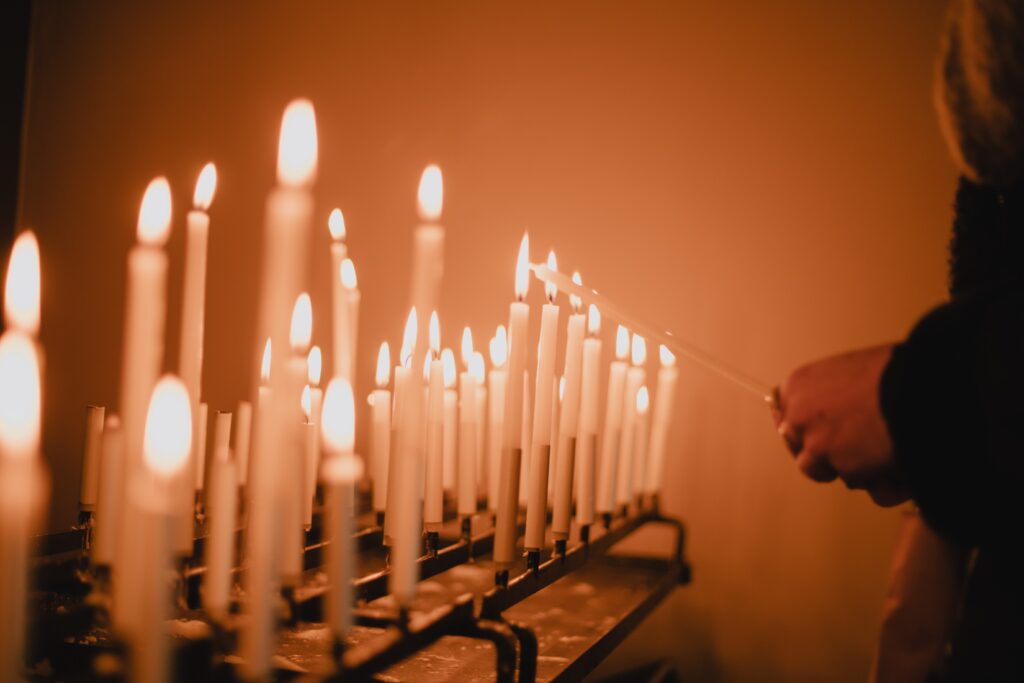
We can belong to a protestant or evangelical church, distanced from the religious traditions of Catholicism or Anglicanism, where we practice spontaneous prayers that are not bound by tradition. However, these could also be mouthed prayers with distant hearts as Isaiah and Jesus warned:
“He replied, “Isaiah was right when he prophesied about you hypocrites; as it is written: “‘These people honor me with their lips, but their hearts are far from me. They worship me in vain; their teachings are merely human rules.’ You have let go of the commands of God and are holding on to human traditions” (Mar 7:6-8).
The ultimate issue is not what sort of church we belong to but whether the redeeming activity of the Holy Spirit, based on a deep understanding of the gospel, is occurring in our hearts and minds:
“For we know, brothers and sisters loved by God, that he has chosen you, because our gospel came to you not simply with words but also with power, with the Holy Spirit and deep conviction” (1Th 1:4-5).
MYTH 6: REPENTANCE AUTOMATICALLY REMOVES THE NEGATIVE CONSEQUENCES OF SIN
Sometimes we think that repentance eliminates the negative consequences of sin. The Bible does state that God is quick to forgive and delights to shower us with grace:
“The LORD is compassionate and gracious, slow to anger, abounding in love. He will not always accuse, nor will he harbor his anger forever; he does not treat us as our sins deserve or repay us according to our iniquities” (Psa 103:8-10).
However, it is equally clear that events set in motion by sin are not automatically cancelled in every instance. An obvious example is the sin of murder or sexual immorality. The deceased person is not suddenly brought back to life and the unwanted pregnancy does not suddenly disappear. Even in situations where it seems possible for God to arrest the unfolding of negative events, it is clear that He does not always do so.

The classic example is David, in the Old Testament. He repented of his adultery with Bathsheba and his murder of her husband Uriah the Hittite. The consequences of repeating sexual sin and murder reverberated throughout the Kingdom through David’s offspring as Nathan prophesied:
“Why did you despise the word of the LORD by doing what is evil in his eyes? You struck down Uriah the Hittite with the sword and took his wife to be your own. You killed him with the sword of the Ammonites. Now, therefore, the sword will never depart from your house, because you despised me and took the wife of Uriah the Hittite to be your own.’ “This is what the LORD says: ‘Out of your own household I am going to bring calamity on you. Before your very eyes I will take your wives and give them to one who is close to you, and he will sleep with your wives in broad daylight. You did it in secret, but I will do this thing in broad daylight before all Israel’” (2Sa 12:9-12).
Nathan’s prophecy is fulfilled in recurring sins of sexual immorality and violence: David’s son Amnon raped his half-sister Tamar and David’s son Absalom murdered Amnon (2 Sam 13). Absalom usurped the Kingdom, causing David to flee Jerusalem, after which they “pitched a tent for Absalom on the roof, and he slept with his father’s concubines in the sight of all Israel” (2Sam 16:22). After David’s death, his son Adonijah tried to usurp the throne from Solomon who had him put to death (1 Ki 2:13-25). In addition, Solomon, who started out so well was brought low by his lust for women. He married women from nations from which God had forbidden intermarrying. He had 700 wives of royal birth and 300 concubines and he ended up worshipping their gods ((1Ki 11:1-8).
We can also see a clear New Testament, New Covenant example of consequence for sin in the Corinthian church. Their lack of respect for each other and for the Lord’s supper caused a number of them to fall asleep (i.e. meet a premature death):
“For those who eat and drink without discerning the body of Christ eat and drink judgment on themselves. (30) That is why many among you are weak and sick, and a number of you have fallen asleep. (31) But if we were more discerning with regard to ourselves, we would not come under such judgment. (32) Nevertheless, when we are judged in this way by the Lord, we are being disciplined so that we will not be finally condemned with the world” (1Co 11:29-32).
We need not give into despair, for God’s mercy outweighs His judgment (Exo 34:6-7) and, just as He did with David and then with the exiled nation of Israel, he will not abandon us but hold us tight and restore us through any consequences we may need to traverse (Isa 40:1-2).
MYTH 7: WE CAN CHOOSE WHICH SINS TO REPENT OF
Another deception when it comes to repentance is the thought that we can pick and choose which things to be sorry about. This is part of human nature, where we tend to evaluate certain sins as worse than others. Fit people may judge obesity and be blind to their sin of idolatry in the pursuit of the perfect body. Similarly, a hard-working, wealthy people may judge the lazy who are poor due to sloth (Pro 12:24; 19:15; 10:18), while remaining blind to their own sins of hard heartedness. The list goes on.

The Bible cuts through this deception, showing that we are obligated to keep ALL of God’s commands from the heart. Since there is no one who can do this, except for Jesus, one has to choose between our self-righteousness and damnation (Joh 8:24) or receiving Jesus’ righteousness through God’s grace and forgiveness.
“For whoever keeps the whole law and yet stumbles at just one point is guilty of breaking all of it. For he who said, “You shall not commit adultery,” also said, “You shall not murder.” If you do not commit adultery but do commit murder, you have become a lawbreaker. Speak and act as those who are going to be judged by the law that gives freedom, because judgment without mercy will be shown to anyone who has not been merciful. Mercy triumphs over judgment” (Jas 2:10-13).
“…for all have sinned and fall short of the glory of God, and all are justified freely by his grace through the redemption that came by Christ Jesus” (Rom 3:23-24).
A related aspect will be realizing that having the sin in our heart is serious, even if we don’t act out the sin (Mat 5:21-22, 27-28). Similarly, failing to do good when it is in our power to do so or failing to do the good to the best of our ability equally counts as sin (Pro 18:9; Jas 4:17; Pro 3:27).
If we truly understand our need and opt for God’s grace, we will bring every single conscious sin into the light, even as we trust God completely to cover the sins we are not yet aware of (Ps 19:12-13; 1Co 4:3-5).
Here we are dealing with repentance in truth, in all its depth and breadth. Depth suggests we are doing it from the heart and moving away from superficial judging and ranking of sins and choosing which ones to get serious about. This leads to the breadth of repentance where we bring ALL things into the light of God’s grace, leaving nothing out.
This is a sign of connecting with God in spirit and truth (Ps 51:6; Joh 4:23-24). If we understand that God is All-mighty, All-knowing and perfect in His standards, then the thought of hiding anything from God will be seen as ridiculous, no less ridiculous than trying to be righteous in our own strength.
TRUE REPENTANCE IS GROUNDED IN LOVE AND LOVE LAYS ALL MYTHS TO REST
Repentance is a change of mind, heart and behaviour with respect to breaking God’s commands. Since love is God’s highest command and the heart and meaning of all the commands that exist in Scripture (Mar 12: 29-31), it is clear that true and deep repentance arises out of and leads to true love, as it is defined throughout Scripture and in Jesus’ life.
From a heart of love, where we truly care about God and neighbour, true repentance occurs. We are no longer dabbling in myths and playing games. We are grieved in heart and mind for how our selfishness and rebellion has offended God and hurt our neighbour. It is not about self-preservation and saving face, but rather a desire to restore relationships.
This is not within our power to do, trapped as we are by sin, deception and hardness of heart (Joh 6:44; Rom 5:6, 8:3; Eph 4:18; 2 Co 4:4). Consequently, when one detects true repentance from the heart you can be sure it is the gift of God through the work of the Holy Spirit.
WORKING WITH YOUR CONSCIENCE
A final point about repentance is that you need to work with your conscience.
“Work with” has a double meaning and both meanings are intended. The first meaning suggests accommodating your expectations and demands to the level at which your conscience is operating. The second meaning suggests working at training and purifying your conscience to bring it to a healthier state.
Growing up in this world inevitably skews your conscience, making it over or under-sensitive and not accurately aligned to God’s truth. Consequently, your conscience might be pricked about doing something that’s not actually a sin. On the other hand, you might not feel any pangs, when you should, because the behaviour in question is actually a sin.
Either way, you need to work with your conscience in its current state, even as you keep seeking God’s will and working out your salvation. This will lead to working with your conscience in the second sense, shifting it to a better state as you grow in knowledge. As you engage in a lifestyle of repentance, your conscience will be healed by the gracious ministrations of the Holy Spirit.
We see both of these aspects of working with your conscience in Scripture.
In the first Scripture from 1 Corinthians, Paul talks about respecting the state of your fellow believer’s conscience around the issue of food sacrificed to idols. We can apply this message to any issue of conscience (and all behaviour can be an issue of conscience). Furthermore, we can apply it to ourselves as well as to others.
“So then, about eating food sacrificed to idols: We know that “An idol is nothing at all in the world” and that “There is no God but one.” For even if there are so-called gods, whether in heaven or on earth (as indeed there are many “gods” and many “lords”), yet for us there is but one God, the Father, from whom all things came and for whom we live; and there is but one Lord, Jesus Christ, through whom all things came and through whom we live. But not everyone possesses this knowledge. Some people are still so accustomed to idols that when they eat sacrificial food they think of it as having been sacrificed to a god, and since their conscience is weak, it is defiled. But food does not bring us near to God; we are no worse if we do not eat, and no better if we do. Be careful, however, that the exercise of your rights does not become a stumbling block to the weak. For if someone with a weak conscience sees you, with all your knowledge, eating in an idol’s temple, won’t that person be emboldened to eat what is sacrificed to idols? So this weak brother or sister, for whom Christ died, is destroyed by your knowledge. When you sin against them in this way and wound their weak conscience, you sin against Christ. Therefore, if what I eat causes my brother or sister to fall into sin, I will never eat meat again, so that I will not cause them to fall” (1Co 8:4-13)
In this second Romans scripture, the application to one’s own conscience is clearly stated. The statement in verse 23 “Whatever does not come from faith is sin” could be stated, “whatever does not proceed from a clear conscience is sin”.
“Do not destroy the work of God for the sake of food. All food is clean, but it is wrong for a person to eat anything that causes someone else to stumble. It is better not to eat meat or drink wine or to do anything else that will cause your brother or sister to fall. So whatever you believe about these things keep between yourself and God. Blessed is the one who does not condemn himself by what he approves. But whoever has doubts is condemned if they eat, because their eating is not from faith; and everything that does not come from faith is sin” (Rom 14:20-23).
Thankfully God does not leave us adrift, at the mercy of the dangerous compromises and equally dangerous tyrannies of our wounded and defiled conscience:
“Therefore, brothers and sisters, since we have confidence to enter the Most Holy Place by the blood of Jesus, (20) by a new and living way opened for us through the curtain, that is, his body, (21) and since we have a great priest over the house of God, (22) let us draw near to God with a sincere heart and with the full assurance that faith brings, having our hearts sprinkled to cleanse us from a guilty conscience and having our bodies washed with pure water. (23) Let us hold unswervingly to the hope we profess, for he who promised is faithful” (Heb 10:19-23).